
Jersey Mike's MenuPrices & Calories 2026
All 26 items with current estimated prices, full calorie counts and honest ordering notes. Know what it costs and what it does before you reach the counter.
Searches item names and descriptions — results update as you type.
Updated August 5, 2026Typical U.S. prices — franchises set their own.
Most searched sub
Turkey & Provolone
Antibiotic-free turkey breast sliced to order with provolone. It shares its calorie profile exactly with the Ham & Provolone, which surprises people who assume turkey is automatically the lighter option — the bread and cheese account for most of both.
- 26
- Menu items
- 8
- Categories
- $2.29
- Subs from
26 items on the menu
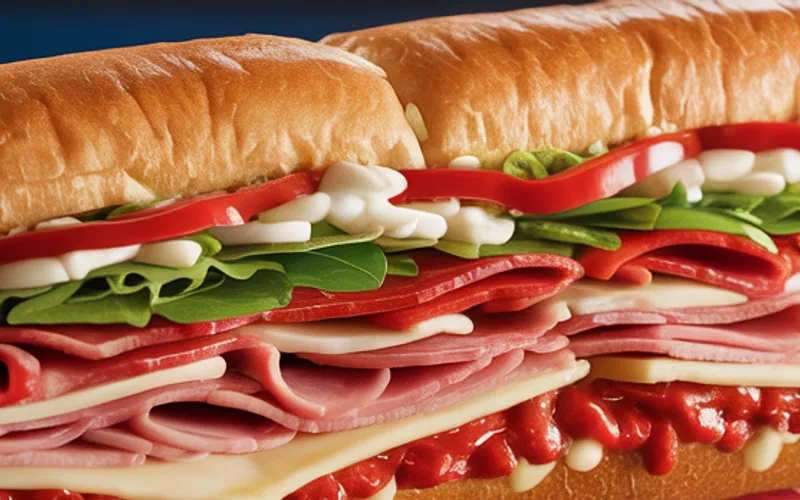
American Classics
5 items
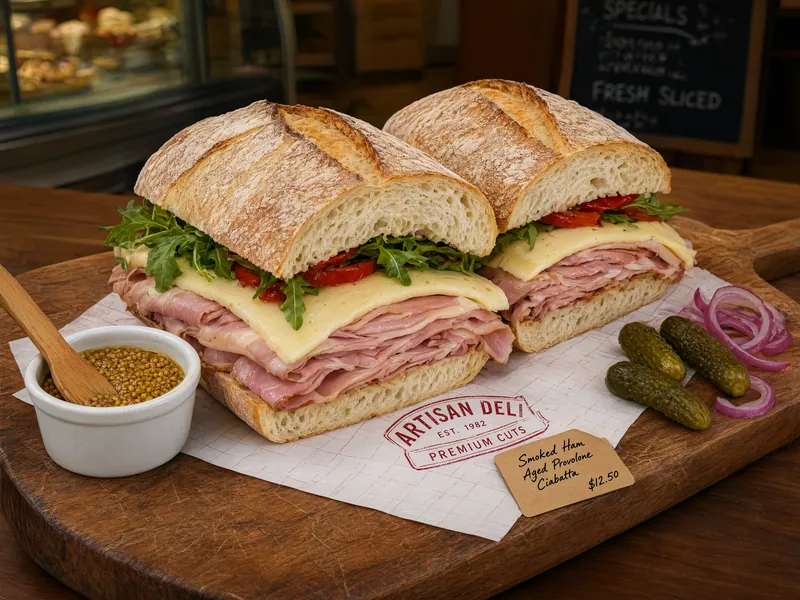
Ham & Provolone
The plainest thing on the cold board and a genuinely useful benchmark for the rest of it. Sliced ham and provolone with the standard vegetables, and nothing else competing for attention. At 800 calories for a regular it sits mid-range, and the mini at 470 is one of the few sub options that works as an actual light lunch rather than a compromise. If you are trying the shop for the first time and want to judge the bread and the slicing rather than a sauce, order this one.
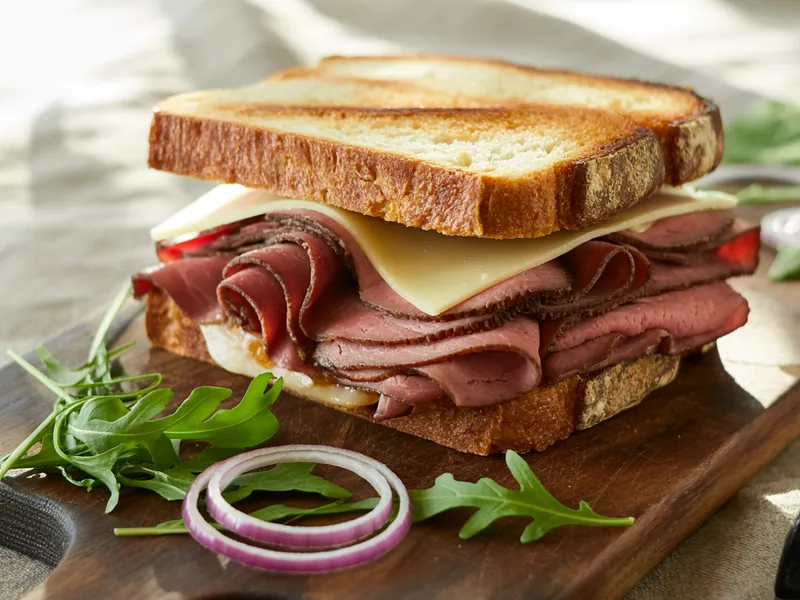
Roast Beef & Provolone
Top round, sliced thin and piled loose rather than packed flat, which is what keeps it tender. This is the best protein-per-calorie choice on the cold board and one of the pricier subs, so you are paying for the meat rather than the build. The giant at 1,850 calories is genuinely a two-person sub. If your shop stocks horseradish, ask for it on the side — it changes the sub completely and costs nothing.
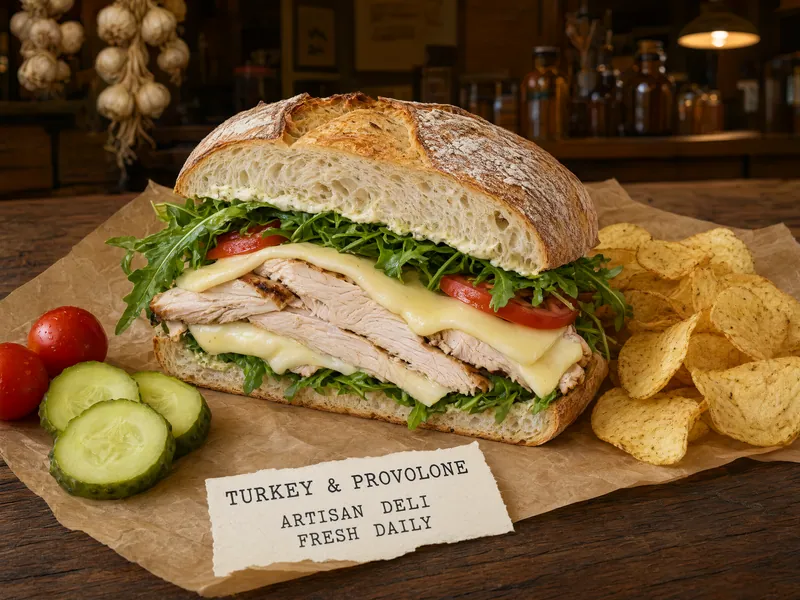
Turkey & Provolone
Antibiotic-free turkey breast sliced to order with provolone. It shares its calorie profile exactly with the Ham & Provolone, which surprises people who assume turkey is automatically the lighter option — the bread and cheese account for most of both. It is the most-ordered sub in many shops and the safest thing on the board. Drop the provolone and you take roughly a hundred calories off without losing much, since the turkey is mild enough to carry the sub alone.
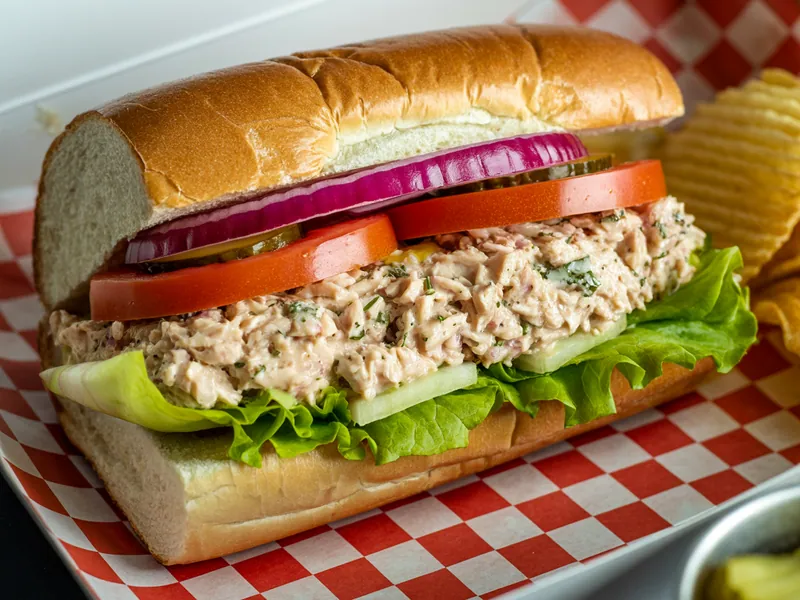
Tuna Fish
Mixed fresh on the premises, which is unusual in the category and shows in the texture. At 1,050 calories for a regular it is markedly heavier than people expect — heavier than the Original Italian — because tuna salad carries mayonnaise throughout rather than as a spread. The giant at 2,000 is one of the highest-calorie items on the whole menu. Worth ordering fresh and eating immediately; it is the sub that degrades fastest in a bag.
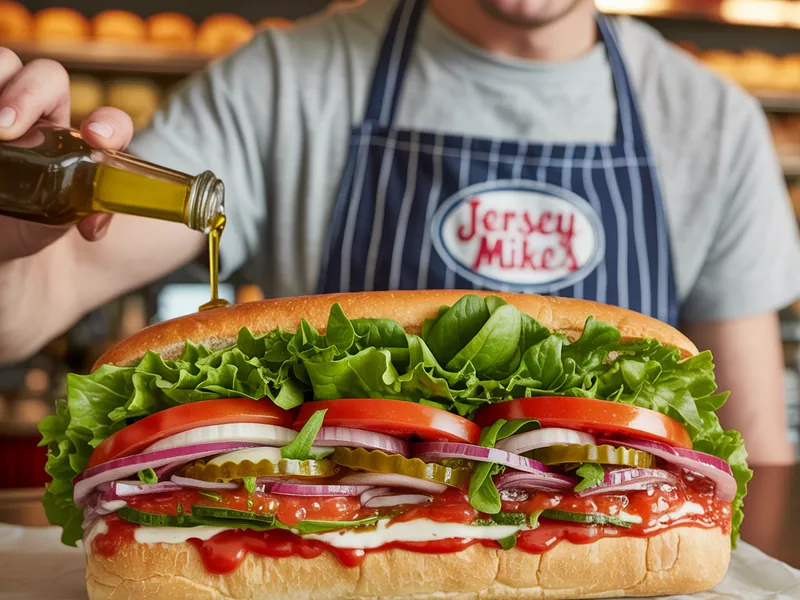
The Veggie
Swiss, provolone and green bell peppers with the standard vegetables. It is the cheapest sub on the board but not the lightest — at 880 calories for a regular it lands above the ham and turkey subs, because two cheeses carry more than one slice of deli meat. That is worth knowing if you chose it expecting a diet option. Ordered in a bowl it drops to around 590, which makes it a genuinely light meal rather than a nominally vegetarian one.
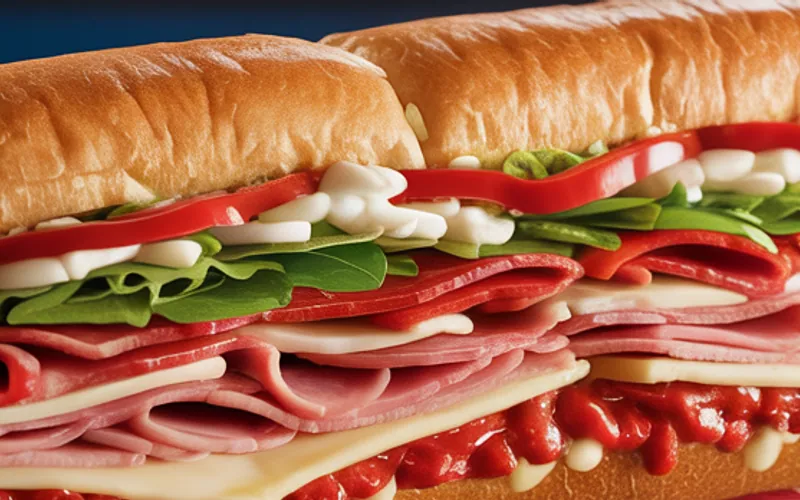
Italian Favorites
3 items
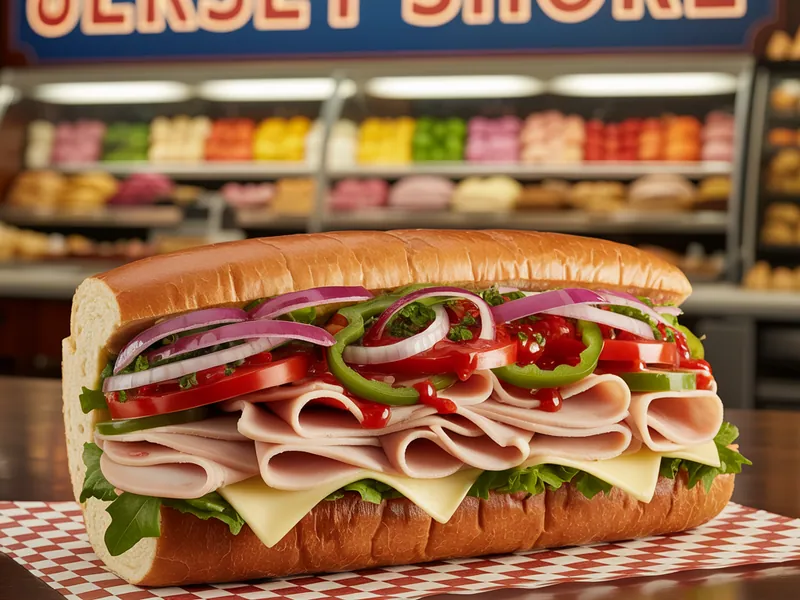
Jersey Shore's Favorite
Provolone, ham and cappacuolo — the shortest of the Italian-style builds and the lightest, at 810 calories for a regular. It gives you the cured-meat character without the salami and pepperoni that push the Original Italian to 930. This is the one to order if you find the full Italian muddled or too salty, and it takes the oil and vinegar finish better because there is less competing on the roll. Ask for extra oregano; it lifts the whole thing.
The Super Sub
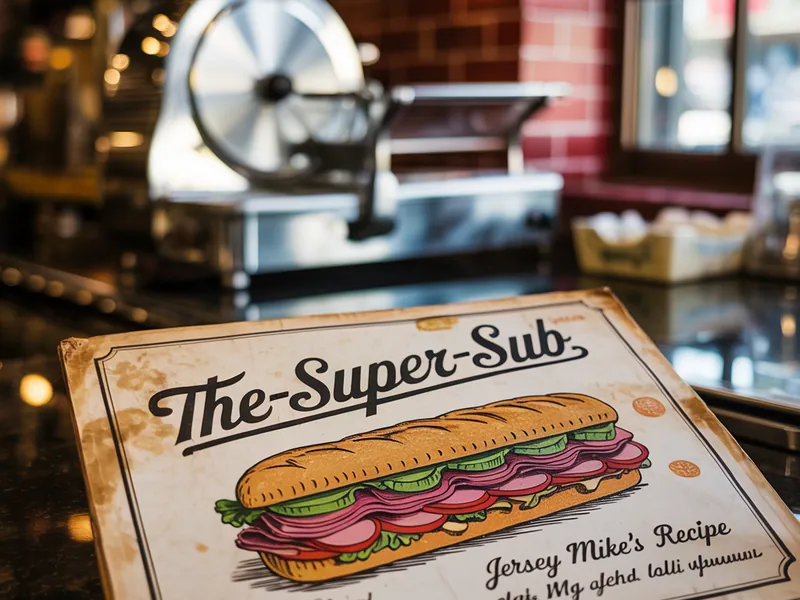
Provolone, ham, prosciuttini and cappacuolo. It sits between Jersey Shore's Favorite and the Original Italian in both meat count and calories, at 820 for a regular. The prosciuttini is the addition that distinguishes it — saltier and more assertive than ham, milder than salami. A sensible middle order and a good first Italian-style sub if you are not sure how much cured meat you actually want on a sandwich.
The Original Italian
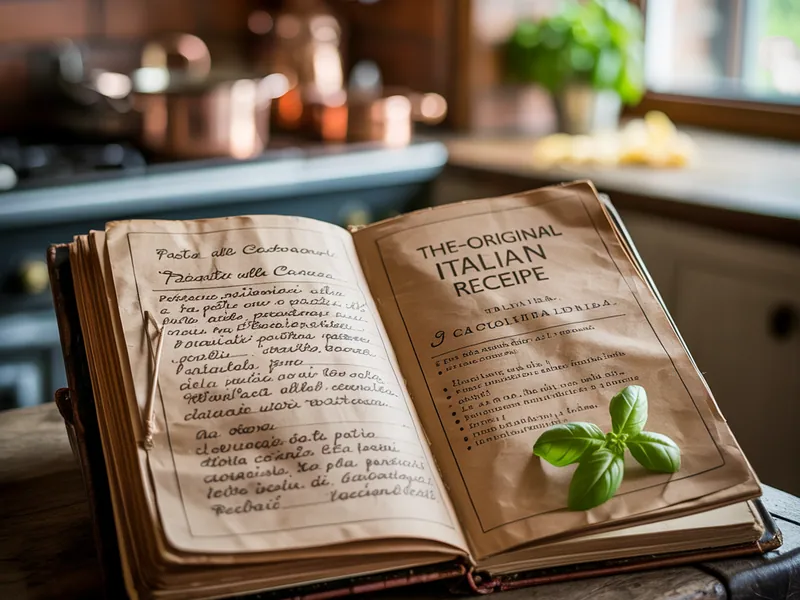
Provolone, ham, prosciuttini, cappacuolo, salami and pepperoni — six components, and the sub the chain is known for. At 930 calories for a regular it is the heaviest cold sub after the tuna, and nearly all of the difference from the lighter Italian builds is the salami and pepperoni. It is also the clearest demonstration of why slicing to order matters, since cured meats change most between freshly cut and held.
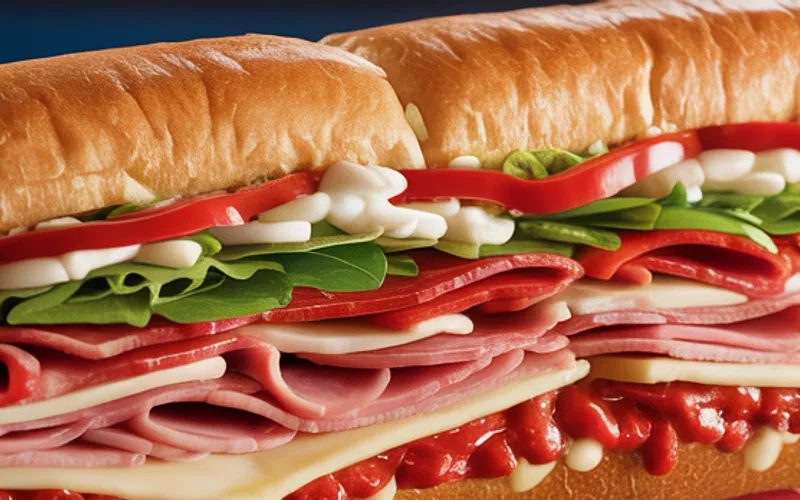
Club Subs
2 items
Club Sub
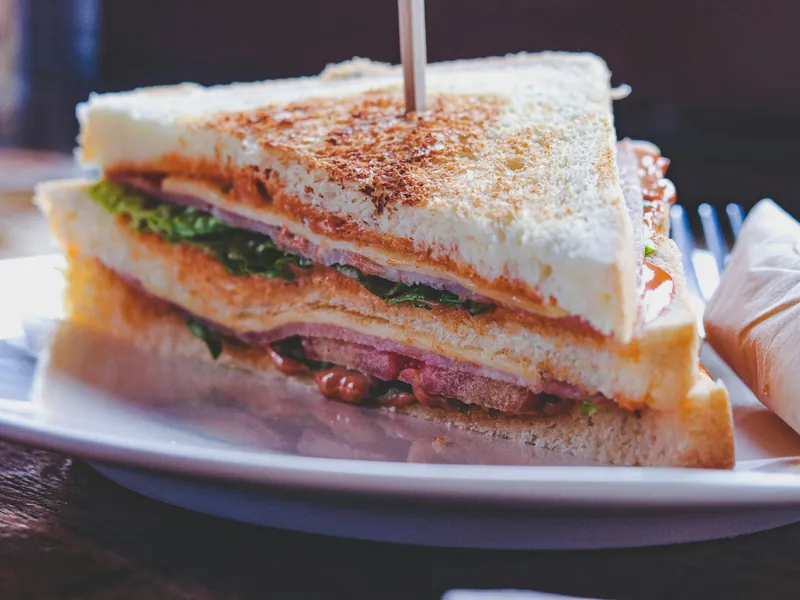
Antibiotic-free turkey, ham, provolone, applewood smoked bacon and mayo. At 1,150 calories for a regular this is heavier than every cheese steak on the board, which almost nobody expects — the mayo and bacon do most of it. The giant at 2,200 is the highest-calorie item on the entire menu. Asking for mayo on the side is the single largest reduction available here and it does not change the character of the sub much.
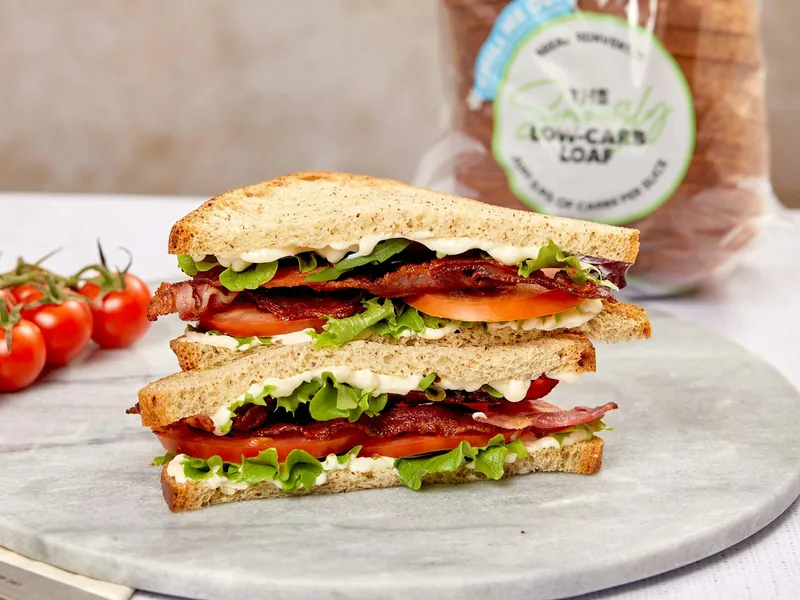
Club Supreme
Roast beef, turkey, Swiss, applewood smoked bacon and mayo — two meats plus bacon, and effectively tied with the Club Sub for the heaviest thing available at 1,160 calories. It eats like it, and it is genuinely a two-sitting sub for most people. Ordered in a bowl it drops to around 870, which is a rare case where removing the bread turns an occasional indulgence into something you could eat on an ordinary Tuesday.
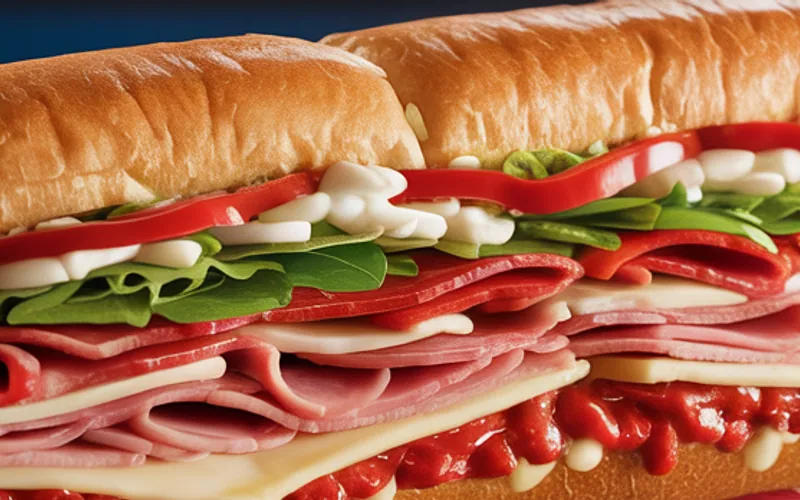
Meatless
1 item
Cheese Steaks
3 items
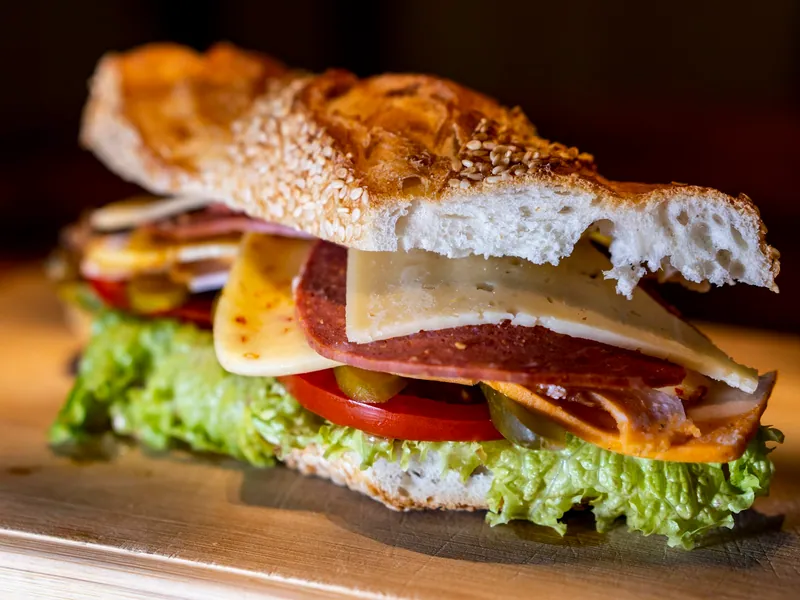
Famous Philly
Grilled onions, peppers and white American on shaved steak. At 730 calories for a regular it is considerably lighter than the club subs and lighter than the tuna, which contradicts the assumption that hot subs are the heavy end of the menu. The white American is a technical choice rather than a flavour one — it contains emulsifying salts that keep it glossy as it cools, where provolone seizes and leaves the last third of the sub different from the first.
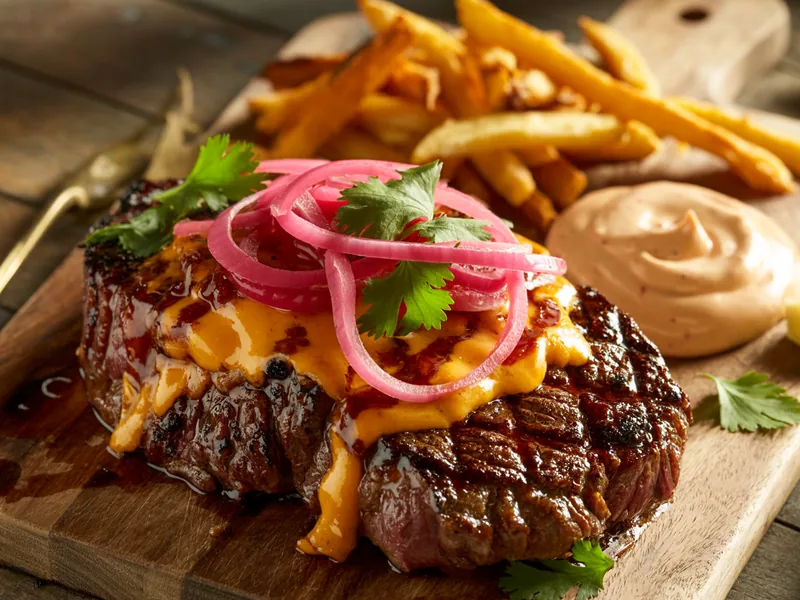
Chipotle Cheese Steak
The Famous Philly with chipotle mayo added. That single addition takes it from 730 calories to 1,000 — a 270-calorie jump from a sauce, which is the starkest illustration on the menu of how much condiments matter relative to fillings. The heat is smoky rather than sharp. Asking for light chipotle keeps the character and removes most of the difference, and it is a change staff make constantly.
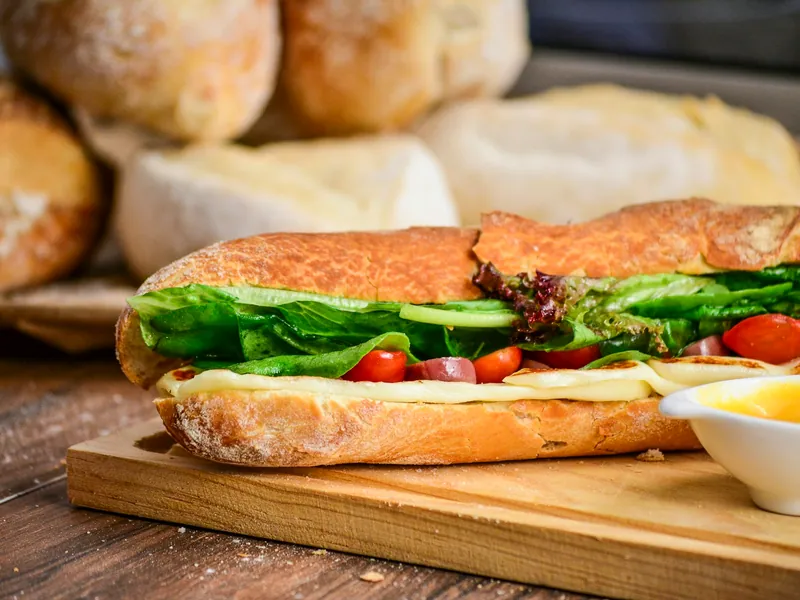
The Big Kahuna
Grilled onions, peppers, mushrooms, jalapeños and extra white American. Despite the loaded build it is only 780 calories for a regular, because vegetables and jalapeños add volume rather than energy — it is a bigger-eating sub than the plain Philly for 50 more calories. Genuine heat rather than token spice. The jalapeños go on at the grill, so asking for them on the side actually changes the heat level rather than just moving them.
Chicken Cheese Steaks
5 items
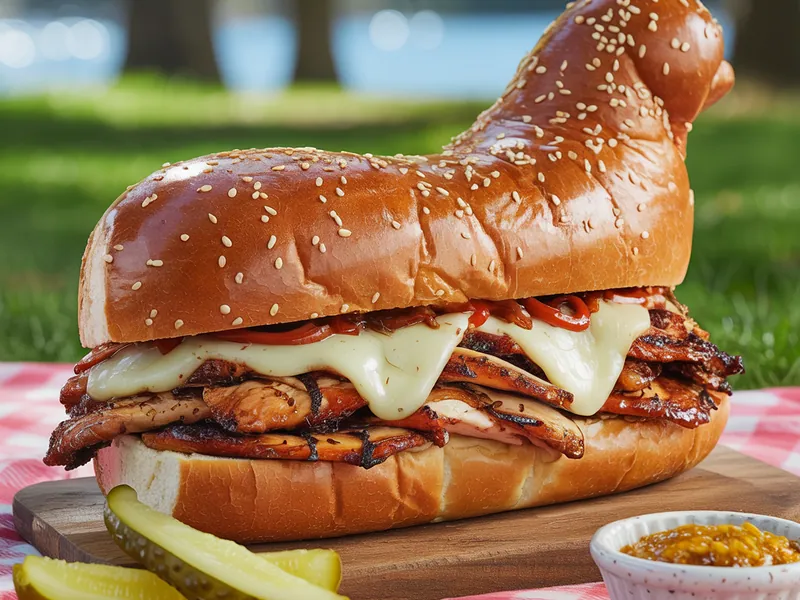
Chicken Philly
Grilled chicken with onions, peppers and white American. At 660 calories for a regular this is the lightest meat-containing hot sub on the board, and one of the lightest full subs anywhere on the menu. Chicken does not build the same crust as shaved steak, so it leans more on the onions — ask for them well caramelised if the shop is not busy. The best choice if you want a hot sub without the calorie load that usually comes with one.
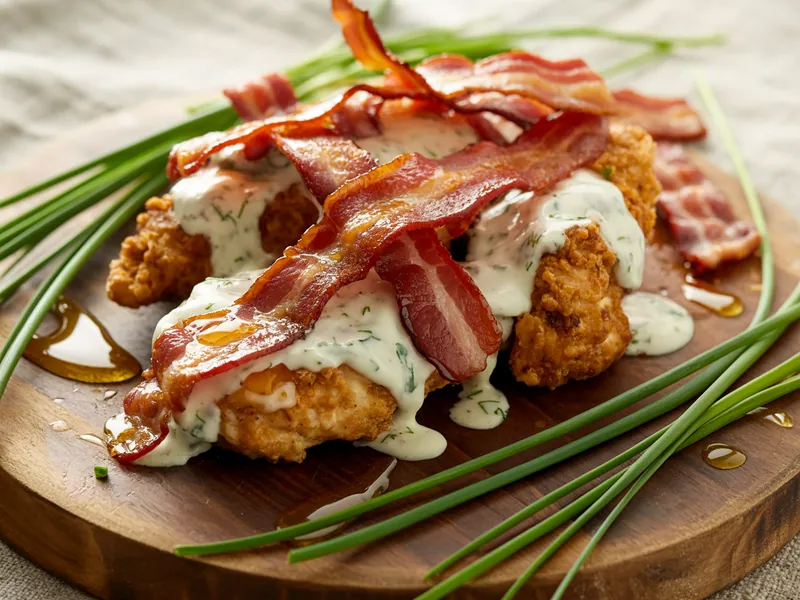
Chicken Bacon Ranch
Grilled chicken with applewood bacon, lettuce, tomato and ranch. The ranch and bacon add roughly 220 calories over the plain Chicken Philly, taking it to 880. It is the richest chicken option and a divisive one — people who like ranch love it, people who do not find it dominates. Ranch on the side is worth requesting on a first order, since it is applied generously and cannot be removed once it is on.
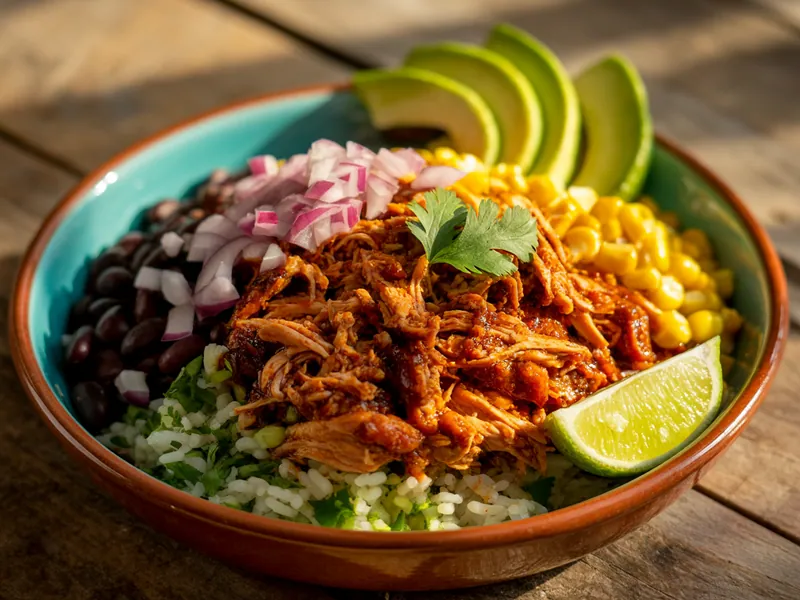
Chipotle Chicken
Grilled onions, peppers, white American and chipotle mayo on chicken. At 930 calories it is heavier than the beef Famous Philly by 200, which is entirely the chipotle mayo — a useful reminder that the protein is rarely what decides a sub's calorie count. Smoky rather than sharp heat. It also holds together better than most hot subs for a collection order, because the mayo keeps it moist.
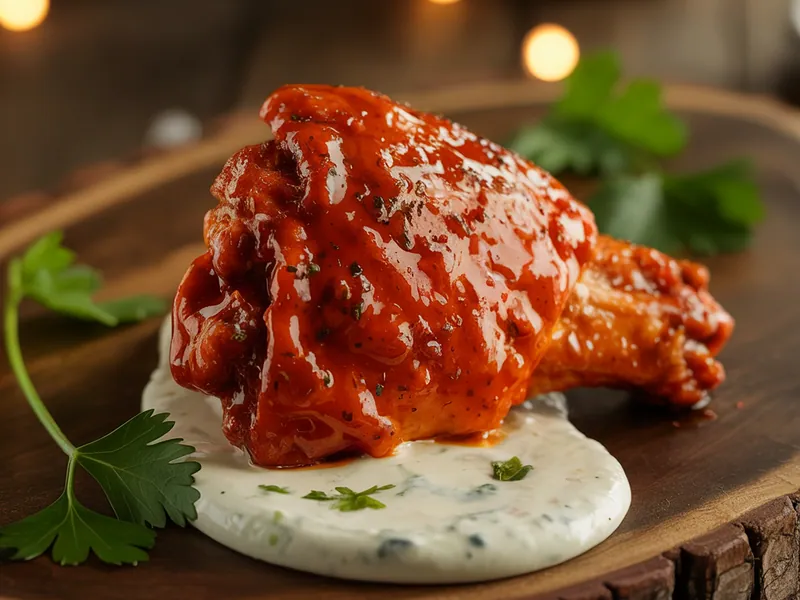
Buffalo Chicken
Grilled chicken with hot sauce, lettuce, tomato and blue cheese dressing. At 900 calories the dressing accounts for a large share. The most useful thing to know: ask for the sauce on the side. Buffalo sauce soaks into the roll within minutes and this sub is dramatically better when you add it as you eat, particularly on a collection order. The blue cheese is a dressing here rather than crumbles, so it spreads through rather than staying distinct.
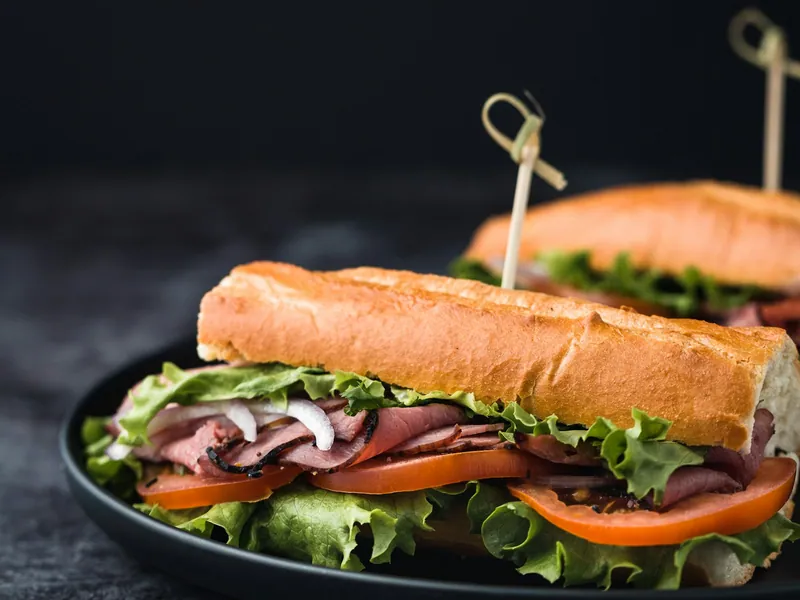
Big Kahuna Chicken
Grilled onions, peppers, mushrooms, jalapeños and extra white American on chicken. At 720 calories it is the lightest of the loaded hot subs and only 60 above the plain Chicken Philly, which makes it the best value on the board in calorie terms — considerably more sub for almost nothing. Real heat from the jalapeños. If you like the Big Kahuna build but find the beef version heavy, this is the direct swap.
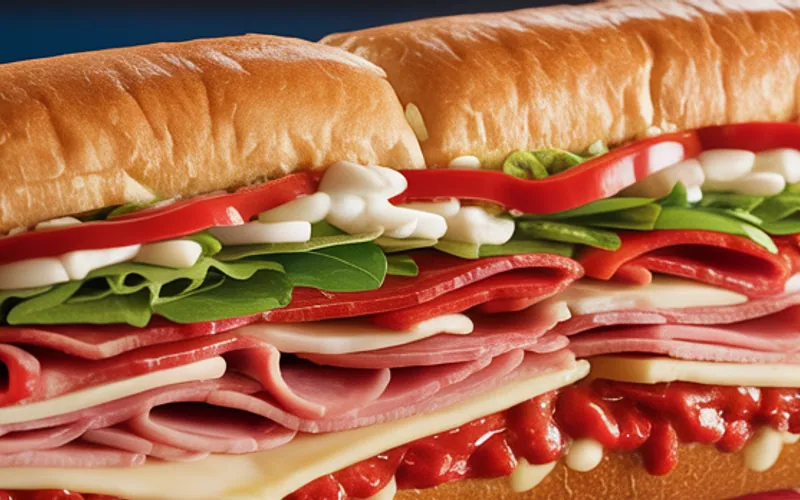
Sides & Extras
5 items
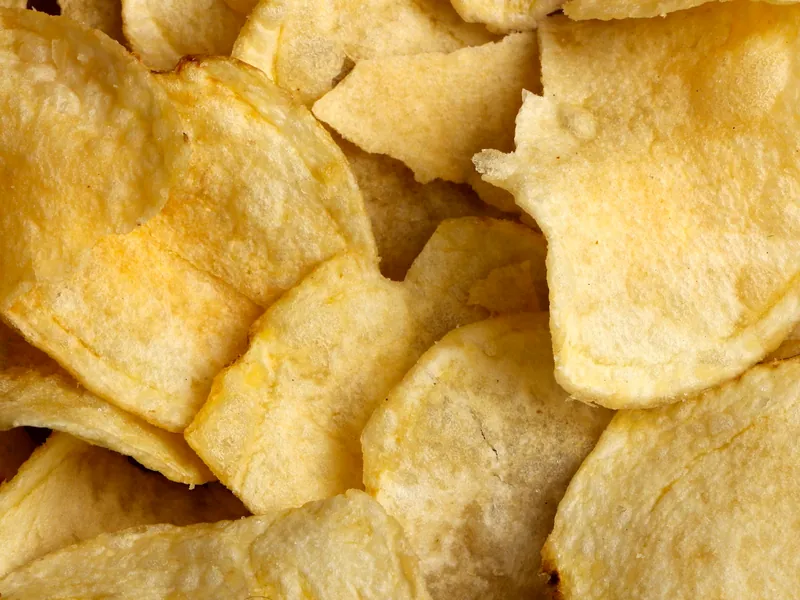
Bag of Chips
Single-serve bag from the rack by the register. Chips are the highest-margin item in a sub shop and the easiest place to overspend — the same bag costs roughly a third as much in a supermarket multipack. At around 220 calories they add meaningfully to a meal that is already substantial. Worth ordering for the crunch against a soft sub, worth skipping if you are watching either the bill or the numbers.
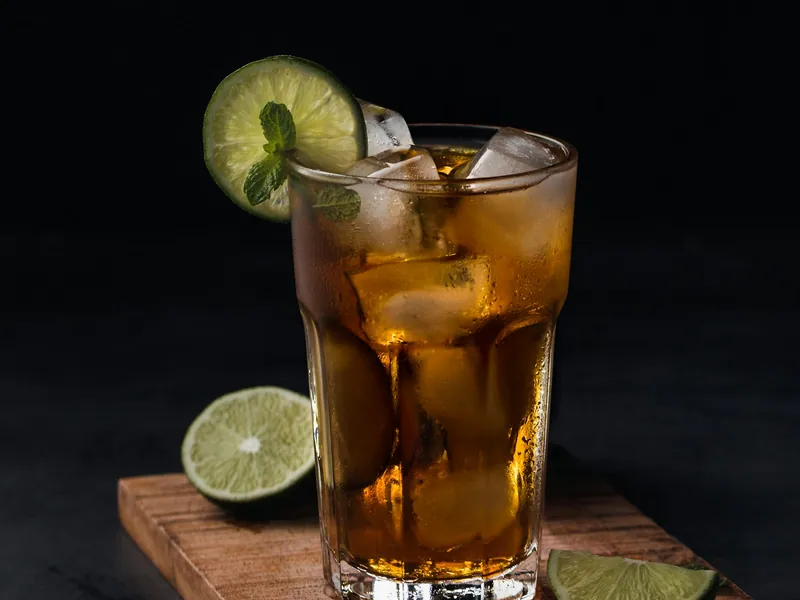
Fountain Drink
Standard fountain range, and free refills at most locations make it good value if you are eating in. If you are collecting, it is the worst value item on the board. Combined with chips it adds roughly $5.50 to a single order, which is the largest avoidable cost at the register. The sugar-free options bring it to almost nothing, and unsweetened iced tea is the cheapest way to have something other than water.

Bottled Drink
Bottled range from the cooler, intended for taking away. It carries more than a fountain cup because the bottle holds more and no ice displaces volume, and it does not qualify for refills. Costs less per ounce than the fountain but more overall. The sensible use is a collection order where a cup would spill; for eating in, the fountain is both cheaper and less.
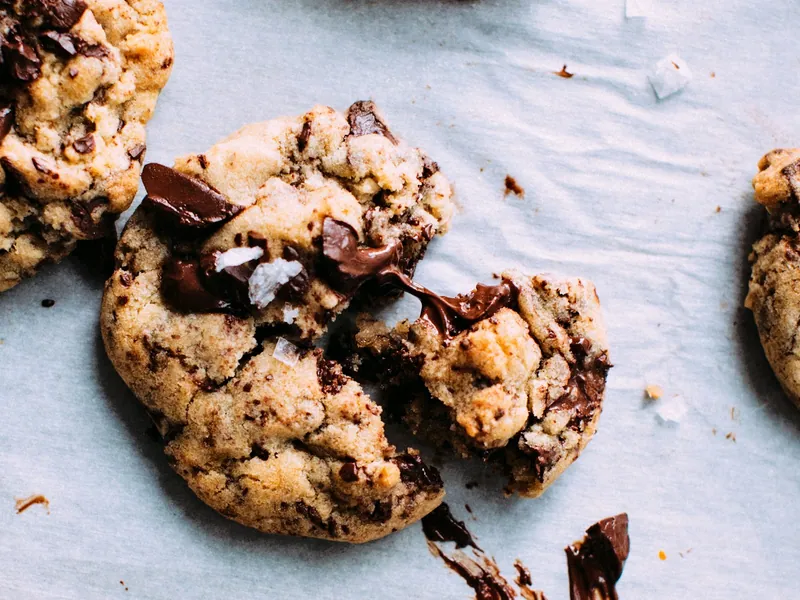
Chocolate Chip Cookie
Baked in shop and genuinely different depending when you arrive — soft in the middle before noon, firm and ordinary by late afternoon. At around 380 calories a single cookie carries more than a bag of chips, which is worth knowing before it goes on the order as an afterthought. Most shops discount three, which is the only sensible way to buy them if there is more than one of you.
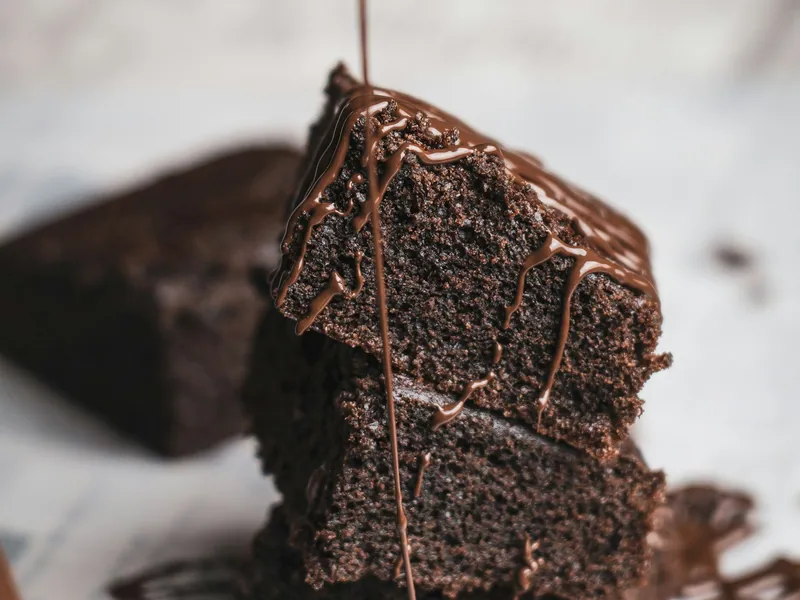
Brownie
Dense and cut thick, and comfortably splittable between two people after a full-sized sub. At around 420 calories it is the heaviest item in the dessert case. It holds far better through the day than the cookies do, so it is the more reliable afternoon order, and it survives a journey better than anything else on the counter if you are taking food back to an office.
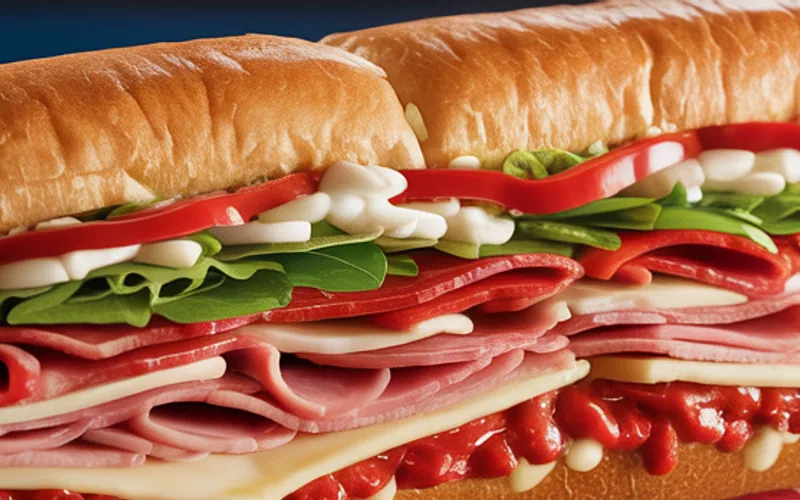
Kids Meals
2 items
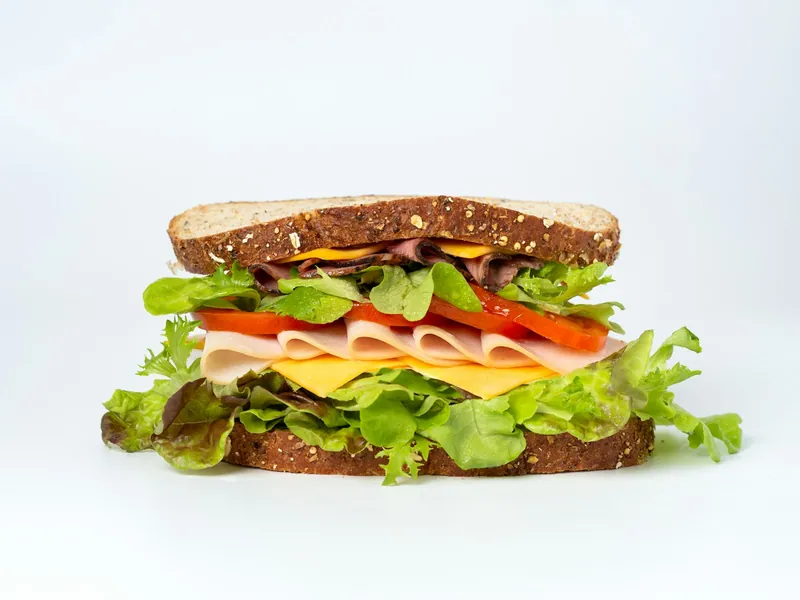
Kids Turkey & Cheese
A kids-size sub with chips, a drink and a cookie, in the 400 to 630 calorie range depending on the drink and cookie chosen. Turkey and cheese is the safest of the two kids options and most children want it plain, which is completely routine — the sub is built to order regardless. Choosing water or a sugar-free drink takes a substantial share off the total without touching the food.
Kids Ham & Cheese
The other kids option, again with chips, a drink and a cookie included, in the same 400 to 630 calorie range. Ham is marginally saltier than turkey and slightly more popular with children who find turkey bland. Worth asking for the cookie to be bagged separately rather than boxed with the meal, which buys you some control over when it gets eaten.
Today's Hot Deals
Promo Codes Worth Trying
Reviewed August 6, 2026. Codes expire quickly and are often region-locked, so treat these as worth a try rather than guaranteed.
$10 off your first order
$30 minimum · new customers
Applies to a first order of $30 or more. The largest single discount on this list, and the one most worth trying if you are ordering for more than one person.
USGROUPON3Q26EXCLUSIVEFirst-order discount
New customers
The shorter form of the code above. If the exclusive version is rejected, this one is worth trying before giving up.
USGROUPON3Q2620% off everything
Sitewide
A percentage discount rather than a flat amount, which makes it the better code on a large order — above roughly $50 it beats the $10 flat discount.
BLAX20Start here
What This Jersey Mike's Menu Guide Actually Covers
This is an independent price and nutrition guide, not an ordering site and not an official one. Every item on the board is listed with a current estimated price, a calorie figure and a description written to tell you what the thing is actually like to eat — not what a marketing department would say about it.
The reason a guide like this exists is straightforward. Franchise locations set their own prices, the printed board in your local shop does not carry calorie counts next to each item, and the official nutrition calculator makes you build a sub before it tells you anything. If you want to know what a Club Supreme costs and what it does to your day before you are standing at the counter, that information is oddly hard to get in one place.
So the Jersey Mike's menu is laid out here by category, with prices and calories side by side, plus the things that genuinely change the maths: what Mike's Way adds, how much a giant actually saves when shared, which subs are lighter than they look, and which are heavier. Prices are typical U.S. estimates gathered from public sources and updated monthly. They will not match your local shop to the cent, and the section on location pricing further down explains why.
Prices
Jersey Mike's Menu Prices by Category
Regular subs sit broadly between $9 and $13.50, with the cold board running cheaper than the hot board and the wraps landing just below their sub equivalents. The cheapest regular sub on the Jersey Mike's menu is the Veggie at around $8.99; the most expensive is the Grilled Pastrami Reuben at around $13.45. Sides run $1.49 to $5.45, drinks $2.49 to $3.49, and desserts $2.29 to $2.79 with a boxed cookie tray at the top end.
The spread across sizes is much wider than the spread across items. A kids mini starts around $5.99 and a giant cheese steak can reach $28.99, which means the size you choose affects your bill more than which sub you pick. Two people ordering regulars will almost always pay more than the same two people splitting a giant, and that gap widens on the hot subs where the giant carries proportionally more filling.
What is not obvious from a price list: the cold subs are where the value sits if you are ordering by weight of meat. Cold cuts are sliced to order rather than cooked, so the labour cost is lower and the portion is more generous relative to price. The hot subs cost more because they occupy a grill and a member of staff for several minutes each.
Every price on this page is for a regular unless stated otherwise. Mini and giant pricing scales roughly to two-thirds and double respectively, though this varies by item and by location.
Nutrition
Calories on the Jersey Mike's Menu — What the Numbers Actually Mean
Calorie counts across the menu run from about 15 for a pickle spear to over 1,080 for a regular Big Kahuna Cheese Steak. For the subs specifically, the working range is roughly 480 to 1,080 for a regular, and the single biggest variable is not the meat — it is the bread and the cheese.
That surprises most people. A turkey sub feels lighter than an Italian, and it is, but only by around 190 calories for a regular. Both are sitting on the same roll, which accounts for a substantial share of the total before any filling goes on. This is why ordering a sub in a tub or on a salad drops the count so dramatically: you are removing the largest single component.
The second largest lever is cheese. A slice of provolone or white American adds roughly 80 to 100 calories, and most subs come with it by default. Asking for no cheese is a bigger saving than switching from mayo to mustard, and it is the change people are least likely to think of.
Oil is the third. The oil and vinegar finish that defines the Italian-style subs is not a trivial garnish — a standard application adds meaningful calories, almost all of it from the oil rather than the vinegar. Asking for extra vinegar and light oil keeps the flavour profile while cutting a noticeable amount. It is the single most efficient trade on the board.
The numbers on this site are for a standard build at regular size. Adding bacon, extra cheese or extra meat pushes a sub several hundred calories higher, and the official nutrition calculator is the place to check a specific custom order if you are tracking closely for medical reasons.
The house style
What Does "Mike's Way" Mean?
Mike's Way means the sub comes finished with onions, lettuce, tomatoes, oregano, salt, olive oil blend and red wine vinegar. It is the default preparation on the cold subs and the thing regulars order without thinking about it.
It matters for two reasons. First, flavour: the vinegar cuts through cured meat and cheese in a way that mayonnaise cannot, which is why the Italian-style subs taste balanced rather than heavy despite the amount of salami and cappacuolo on them. Second, cost: every component of Mike's Way is included at no extra charge, so it is free flavour on a sub you are already buying.
The calorie consideration is worth knowing. The vegetables add almost nothing. The oil does. If you want the profile without the fat, ask for Mike's Way with light oil and extra vinegar — you keep the acidity and the herbs, and lose most of the added calories. Staff do this constantly and it causes no friction.
One practical note: Mike's Way is applied before the sub is wrapped, so a sub ordered for collection and eaten forty minutes later will have a softer roll than one eaten immediately. If you are taking it to go, asking for the oil and vinegar on the side is a reasonable request and keeps the bread intact.
Sizes
Mini vs Regular vs Giant — Which Size Is Actually Worth It
A mini runs roughly five inches, a regular around seven, and a giant about fourteen. The pricing does not scale linearly, which is where the decision gets interesting.
A mini is typically around two-thirds the price of a regular for closer to two-thirds the bread but proportionally less filling. If you routinely leave a third of a regular behind, the mini is straightforwardly the better buy. If you finish a regular comfortably, the mini will leave you short and you will end up adding a side, which erases the saving.
The giant is the genuinely good deal, but only when shared. A giant is roughly double a regular in price for roughly double the length, which sounds like no saving at all until you account for the fact that two people splitting one giant get more filling per person than two people buying regulars, because the giant is built with proportionally more meat. Split between two, it works out cheaper per head. Eaten alone across two sittings, it is fine but the second half suffers — the roll softens in the fridge.
For groups of three or more, the arithmetic shifts again toward catering boxes, which are priced per person rather than per sub and almost always undercut the same number of individual orders.
Mini (~5 inch)
Best if you normally leave food. From around $5.99 on the kids menu. Pairs well with a pickle spear rather than chips.
Regular (~7 inch)
The default, and what every price on this site refers to. Roughly $8.99 to $13.45 depending on the item.
Giant (~14 inch)
Best value per head when split between two. Reaches $28.99 on the premium cheese steaks.
Lighter options
The Healthiest Subs on the Jersey Mike's Menu
If you are looking for the lightest full-sized items, the Veggie Hummus Wrap at around 510 calories and the Veggie sub at around 480 are the two lowest on the board. Neither is a compromise dish — the hummus wrap in particular carries enough body that it does not eat like a diet order.
Among the meat subs, the BLT at under 600 calories is the surprise. It reads indulgent because of the bacon, but there is no deli meat and no heavy cheese layer, so it lands lighter than the turkey sub. The Roast Beef and Provolone at around 690 is the best protein-to-calorie ratio on the cold board, which makes it the sensible order if you are eating for satiety rather than for a number.
The heaviest items are the hot subs, and the top of that list is the Big Kahuna Cheese Steak at around 1,080, the Meatball and Cheese at around 1,050 and the Chipotle Cheese Steak at around 1,050. None of these is unreasonable as an occasional meal; they are simply dinner rather than lunch.
The most effective single change is not swapping items — it is changing the format. Ordering any sub as a tub, a bowl or on a salad removes the roll and takes a large share of the calories with it. That option exists for every item on the board and costs the same. The second most effective is dropping the cheese. Between those two changes, almost any sub on the menu can be brought into a range you are comfortable with, which is a better strategy than restricting yourself to the two vegetarian options.
Value
Cheapest Items and Where the Real Value Sits
The cheapest thing on the Jersey Mike's menu is the pickle spear at around $1.49, and it is genuinely the best value item on the board — around 15 calories, and the acidity does more for a rich cheesesteak than a bag of chips does. The cheapest regular sub is the Veggie at around $8.99, followed by the Chicken Salad and Ham and Provolone in the $10.25 to $10.45 range.
The most expensive line on a typical order is rarely the sub. It is the combination of a drink and a side, which together add around $5.50 and are the two easiest things to remove. A fountain drink with free refills is good value if you are eating in and poor value if you are collecting, since a supermarket multipack costs a fraction per can.
Where the real value sits is in the cold subs at regular size, ordered Mike's Way, with a pickle instead of chips. That combination gets you the most food and the most flavour for the least money, and it is what most regulars end up ordering without ever having worked it out deliberately.
The rewards programme is worth joining purely because it costs nothing. Points accumulate toward a free regular sub, and there is usually a sign-up incentive and a birthday reward. App-exclusive offers are rarely advertised in-shop, so checking the offers tab before ordering rather than after is a habit that pays for itself.
Hot or cold
Hot Subs vs Cold Subs — How to Choose
The cold board is where the chain's reputation comes from. Meat is sliced to order in front of you, which is the single thing that most distinguishes it from a supermarket sandwich or a competitor working from pre-sliced trays. Cold subs are cheaper, lighter, and they travel considerably better.
The hot board is where the indulgence is. Cheesesteaks are chopped on the flat top and folded into the roll while the cheese is still molten, which is a genuinely different product from anything on the cold side. They cost around $1.50 to $2.50 more, run 200 to 400 calories heavier, and degrade fast — a cheesesteak eaten twenty minutes after collection is a noticeably worse sandwich than one eaten at the counter.
The practical rule: order cold if you are taking it anywhere, order hot if you are eating it there. The meatball and chicken parm subs are the most extreme cases, since the marinara starts soaking into the roll immediately and they are close to structurally compromised within fifteen minutes.
Wraps sit between the two. They are consistently 70 to 100 calories lighter than the equivalent sub, hold dressing better than bread does, and are the best option if you are eating at a desk without a plate.
Why prices differ
Why Your Local Prices Do Not Match This Page
Every location sets its own prices. That is not a caveat added to protect this guide — it is how the franchise model works, and it produces real differences between shops a few miles apart.
Locations in major metros such as New York or Los Angeles commonly run 10 to 20% above a typical suburban shop. Airport, stadium, campus and highway rest-stop locations sit at the top of that range or beyond, because concession rents are substantially higher and the captive audience supports it. If a price on a board looks wrong against this page, checking whether you are in one of those settings usually explains it.
Delivery apps add another layer. Menu prices inside DoorDash or Uber Eats typically run 15 to 25% above in-shop prices before delivery fees, service fees and tip. The marked-up menu price is easy to miss because it looks like a normal menu. Ordering for collection through the shop's own app avoids that entirely and is the single largest saving available on a delivery order.
Taken together, the same sub can differ by several dollars between a suburban collection order and an airport delivery order. The figures on this page describe the middle of that range — a typical standalone U.S. location, collected in person.
At the counter
Ordering Tips Worth Knowing
A few things that are not written on the board and make a material difference to what you get.
Ask for it in a tub
Any sub on the Jersey Mike's menu can be made without the roll, in a tub or on a salad, at the same price. It is the largest single calorie reduction available and it is not advertised.
Sauce on the side for collection
Buffalo sauce, ranch and Mike's Way oil all soften the roll within minutes. Ordering them separately keeps the bread intact for the journey.
Extra vegetables cost nothing
Lettuce, tomato, onion, peppers and pickles are included. Extra meat and extra cheese are charged. Ask for more of the free things.
Time your cookie order
Cookies are baked in the morning. Before noon they are soft in the middle; by late afternoon they are ordinary. Ask which batch is freshest.
Check the app before you order
App-exclusive offers are not posted in shop. Two minutes in the offers tab regularly beats any coupon you would find elsewhere.
Order the giant to share
Two people splitting a giant get more filling each than two regulars, for less money. It is the clearest value play on the board.
First time
Reading the Jersey Mike's Menu on Your First Visit
The board is organised by number, and the numbering is the first thing that confuses newcomers. Cold subs and hot subs share a single numbered sequence rather than running in separate blocks, so the numbers jump around and there is no reliable pattern to infer. Ordering by name is entirely normal and nobody will think anything of it.
The second thing worth knowing is that the queue moves in a fixed order: you order, the meat is sliced in front of you, then the sub moves down the line to be dressed. If you want something changed, say it at the start rather than at the till. Asking for no cheese after the cheese has gone on means the sub gets rebuilt, which slows everyone down and is easily avoided.
Bread choice comes early and matters more than people expect. The white roll is the default and the one every calorie figure on this page assumes. A wheat option is usually available, and gluten-free rolls are stocked at most shops though cross-contact in a shared prep line is unavoidable, so a serious allergy warrants a conversation with the manager rather than a request at the counter.
Finally, the size question comes before the topping questions, so decide that first. Most first-time visitors default to a regular, which is the right call — it is the size every price and calorie count on this Jersey Mike's menu guide refers to, and it makes comparing what you paid against this page straightforward.
Locations
Finding a Shop and What Differs Between Them
There are more than two thousand locations open or in development across the United States, which means for most people the question is not whether there is one nearby but which of the nearby ones to use. That choice matters more than it sounds, because shops differ in ways the Jersey Mike's menu itself does not reveal.
The most obvious difference is price, covered further up this page. The less obvious ones are throughput and consistency. A high-volume shop slices meat continuously and bakes bread more often, so the product is fresher at peak times than at a quiet one — the opposite of what people assume. If you have a choice between a busy location and an empty one at lunchtime, the busy one usually produces the better sub.
Hours vary by location and change seasonally, and holiday hours in particular are often confirmed only a week or two in advance. Non-traditional locations inside airports, universities and travel plazas frequently carry a reduced menu, so an item you saw online may simply not be available. If you are making a trip specifically for one sub, a phone call first is worth the thirty seconds.
Collection almost always beats delivery on both price and quality. Delivery app menus carry a markup before any fees are applied, and hot subs in particular arrive materially worse than they left. Ordering ahead through the shop's own app for collection gets you the in-shop price and a sub that has not been sitting in a bag.
Saving money
Coupons, Rewards and What Actually Reduces the Bill
Sub chains do not generally issue the kind of public coupon codes that sites promise. What exists instead is a rewards programme, app-exclusive offers and periodic promotions, and those are worth considerably more than any code you would find through a search.
The rewards programme is free and points accumulate toward a free regular sub, with a sign-up incentive and a birthday reward on top. The app-exclusive offers are the part people miss — they are rarely advertised on the board in shop, so a customer who orders at the counter without checking the app is routinely paying more than the person behind them.
Beyond promotions, the largest reductions come from ordering decisions rather than discounts. Dropping the drink and the side saves around $5.50 on a single order, which is more than most promotions deliver. Splitting a giant between two people beats two regulars. Ordering a mini instead of a regular saves roughly a third if you were going to leave food anyway.
For groups, catering boxes priced per person are consistently cheaper than the same number of individual subs, and they arrive with the sides bundled. If you are feeding five or more people from the Jersey Mike's menu, that is the route worth pricing first rather than last.
Gift card bonus promotions around the winter holidays are the other reliable saving — buying cards during that window often earns bonus cards worth a meaningful percentage of the spend, which is straightforward money off if you eat there regularly anyway.
Compared
How It Compares to Subway, Jimmy John's and Firehouse Subs
On sticker price, this is not the cheapest option. Subway and Jimmy John's both generally undercut it on a like-for-like regular sub, and the comparison table on this page shows that plainly rather than hiding it behind a claim of being the best value.
What the higher price buys is portion and preparation. Meat is sliced to order rather than pre-sliced, which changes both texture and perceived freshness noticeably. Portions run heavier than Subway's standard build, and the default Jersey Mike's menu preparation with oil, vinegar and oregano gives the cold subs a stronger flavour profile than a plain mayo-based build.
Jimmy John's competes on speed and delivery rather than size — its default sub is smaller, which is part of why it prices lower. Firehouse Subs sits closest on price and often slightly above, with steamed hot subs and generous meat portions, making it the nearest direct comparison rather than Subway.
The honest summary: if you are optimising purely for cost per sandwich, you will pay less elsewhere. If you are optimising for cost per ounce of finished sub, or you care about sliced-to-order meat, the gap closes considerably and in some comparisons reverses. Which of those matters is a personal call, and a price guide that pretended otherwise would not be much use.
Families and groups
Ordering for Kids, Offices and Parties
Feeding children from a sub shop is mostly a portion problem rather than a menu problem. A mini sub is roughly the right size for a child under about ten, and a kids mini with a small drink typically lands around six dollars, which is competitive with anywhere else on a high street. Most children want it plain, and asking for it without Mike's Way is completely routine — the sub is built to order regardless.
For offices, the arithmetic changes at around five people. Below that, individual subs are simpler and roughly the same price. Above it, catering boxes priced per head start to undercut individual orders meaningfully, and they arrive with sides bundled rather than charged separately at $2.29 to $3.29 each.
The practical advice for any group order is to reduce variety rather than increase it. Three well-chosen subs in quantity — one cold Italian-style, one plain turkey, one vegetarian — cover almost every preference in a normal office and are far easier for the shop to produce accurately than fifteen bespoke orders. Accuracy matters more than choice when the food arrives at a desk rather than a counter.
Order at least a day ahead for anything over about ten people, and longer around holidays and graduation season when catering slots fill early. Confirm dietary requirements when you book rather than on the day, and keep those portions physically separate from the main platters rather than at the end of the same line.
One last note on timing: cold subs travel and hold far better than hot ones, so a group order from the cold section of the Jersey Mike's menu will be in noticeably better condition an hour later than an equivalent order of cheesesteaks.
How this is maintained
How Often This Jersey Mike's Menu Guide Is Updated
Prices are reviewed monthly and spot-checked whenever a national price change is announced or a new item appears. The date shown at the top of the page reflects the last full review rather than the last time any text changed, so you can tell how current the numbers actually are.
Calorie figures change less often, since recipes are stable, but they are re-checked against published nutrition data at the same interval. Where a figure is an estimate for a standard build rather than an exact published number, the page says so rather than implying precision that is not there.
If you find a price on this Jersey Mike's menu guide that does not match your local shop, that is expected — and if it is off by more than a dollar or two, it is worth telling us. Corrections backed by a photo of a menu board or a receipt are the fastest way to improve the guide, and verified ones usually go live within a few days.
This site is independent and fan-built. It is not affiliated with, endorsed by, or sponsored by any sandwich chain, and it does not take orders or payment. For official information, ordering and complete nutrition disclosures, use the chain's own website.
Bread
Bread Options and Why the Roll Decides Most of the Calories
Bread is the component people think about least and the one that changes the outcome most. Four choices cover almost every order: plain white, wheat, rosemary parmesan, and a gluten-free roll from Udi's. Everything else on the board — the meat, the cheese, the vegetables, the finish — is layered onto whichever of those you pick, and the roll is carrying a larger share of the total than the filling on most cold subs.
The white roll is the default and the baseline. It is baked in-shop through the day, which is the single practical reason to order from a busy location rather than a quiet one: turnover means a roll that came out of the oven more recently. A sub built on bread baked four hours ago is a noticeably different sandwich from one built on bread baked forty minutes ago, and no amount of care with the filling compensates.
Wheat is the same size and broadly the same calorie count. People order it expecting a meaningful nutritional difference and there is not one worth planning around. It has a slightly firmer crumb, which holds up marginally better under oil and vinegar, and that is the honest case for it. If you are choosing wheat for health reasons, the change that actually moves the number is the one described in the next section.
Rosemary parmesan is the one worth trying if you have never had it. It carries roughly forty-five additional calories over the plain roll and it changes the character of the sub more than any single ingredient swap available. On the plainer cold subs — ham and provolone, turkey and provolone — it does most of the work that a sauce would otherwise do, which makes it a useful way to keep a simple sub interesting without adding mayonnaise. On the heavily built Italian-style subs it competes rather than complements, and the plain roll is the better call there.
The gluten-free roll costs about a dollar fifty more and runs roughly fifty-five calories lighter than the standard roll. Two honest caveats. It is a smaller roll, so a regular on gluten-free bread is genuinely less food than a regular on white. And a sub shop that slices cured meat, handles wheat rolls and shares a preparation surface all day is not a coeliac-safe environment, whatever the roll itself is made of. If you are avoiding gluten by preference the roll does the job; if you are avoiding it medically, the tub option in the next section removes the variable entirely.
One practical note that applies to every bread choice: ask for the sauce on the side if you are not eating within about ten minutes. Oil, vinegar, chipotle mayo and ranch all begin softening the roll immediately, and a sub that was excellent at the counter is noticeably worse by the time it reaches a desk across town.
Low carb
Sub in a Tub — the Biggest Calorie Saving on the Menu
A sub in a tub is any sub on the board built without the roll, served in a container over shredded lettuce. Every filling, every cheese, every part of the Mike's Way finish stays exactly the same. Only the bread goes. Some shops and some ordering apps call it a bowl or a sub in a bowl; it is the same thing and staff will understand either phrasing.
The saving is around 290 calories, at the same price as the sub. That is the largest single reduction available anywhere on the Jersey Mike's menu, it applies to every item, and it is not advertised on the board. No substitution, no compromise on what you actually wanted to eat, no upcharge. If you take one thing from this page, take that one.
It reframes several items completely. A regular Original Italian at 930 calories is a substantial meal; the same sub in a tub lands near 640, which is an ordinary lunch. The Veggie drops from 880 to roughly 590, which finally makes it the light option people assume it already is. The Chicken Philly, already the lightest hot sub at 660, comes down to the high 300s — genuinely modest for a hot lunch containing a full portion of chicken.
The trade-off is real and worth stating plainly. You lose the structure that makes a sub a sub. Oil and vinegar pool at the bottom of the container rather than soaking into bread, so the last few forkfuls are wetter and saltier than the first. The subs that survive this best are the ones where the filling was the point — the cheese steaks, the roast beef, the chicken builds. The subs that suffer most are the plain cold ones, where the bread was contributing more than you realised.
It is also the most reliable option if you are avoiding gluten for medical reasons, since it removes the roll from the equation rather than substituting a different one. Cross-contact from shared surfaces and slicers still applies, and any shop will tell you the same if you ask, but the largest single source of gluten in the order is gone.
If you are working out how a week of these adds up rather than a single lunch, the weekly meal planner holds the full item list with prices and calories and totals it as you build. Ordering two of five weekday meals as tubs rather than subs removes close to 600 calories from the week without changing what you eat or what you pay.
Cost
How Much Is a Sub? Real Price Bands, Not a Single Number
The honest answer is a range, and anyone giving you a single national figure is guessing. Across the United States a regular sub typically lands between nine and thirteen dollars, a mini between six and nine, and a giant between fourteen and twenty. The spread is not noise — it is the actual variation between a suburban strip-mall shop and a downtown location paying five times the rent.
What a full meal costs is the more useful question, because almost nobody orders a sub alone. A regular sub with a bag of chips and a fountain drink typically runs fifteen to nineteen dollars before tax and tip. Dropping the drink and bringing your own takes roughly three dollars off. Dropping to a mini and swapping chips for a pickle spear brings the same meal in around ten. Those three configurations are the realistic bookends for one person, and the gap between them across five weekday lunches is close to fifty dollars.
Ordering for two changes the arithmetic in a way most people never test. Two regulars run around twenty-four dollars. One giant split between two people typically runs sixteen to eighteen and delivers more filling per person, because the price gap between regular and giant is proportionally smaller than the size gap. This is the most reliable saving available to a couple, it requires no coupon, and it works on every sub on the board.
On the current Jersey Mike's menu figures used throughout this site, the cheapest sub is the Veggie at $8.99 and the most expensive regular subs sit in the twelve-to-thirteen-dollar range. Sides start at $2.29, drinks at $3.19, desserts at $2.29. Kids meals land around $6.49. Those are typical U.S. estimates and the section on regional pricing further down explains how far your local shop can reasonably sit from them.
Two things reliably push a bill above these bands. The first is delivery: app menu prices commonly run fifteen to twenty-five percent above in-shop prices before the delivery fee, service fee and tip are added, which means a fifteen-dollar meal routinely arrives as a twenty-eight-dollar transaction. The second is captive locations — airports, stadiums, motorway service areas and university campuses — where a ten to twenty percent premium over a suburban shop is normal and not a mistake.
The numbering system
Why the Subs Are Numbered, and Which Numbers Matter
Almost every sub on the cold and hot boards carries a number, and regulars order by it. "A number seven, regular, Mike's Way" is a complete order. The system exists because it is faster and more accurate at a counter than reading out a list of ingredients, and because the numbers stay stable across locations in a way that informal names do not.
The numbers are not sequential in any meaningful way and they are not ranked by popularity. They accumulated as the menu grew, which is why the most-ordered subs are scattered across the range rather than clustered at the front. Trying to infer anything from the number itself is a dead end — it is a label, not a rating.
A short list covers most of what you will hear ordered. The #13 is the Original Italian, the six-meat build the chain is best known for and the one most likely to be someone's default. The #7 is Turkey and Provolone, the plainest popular sub and the most-ordered item in a great many shops. The #2 is Jersey Shore's Favorite, provolone with ham and cappacuolo, which is the Italian-style build for people who find the full #13 too busy. The #9 is the Club Supreme, which is the heaviest cold sub on the board. The #56 is the Big Kahuna cheese steak, and among the hot subs it is the one people order by number rather than name.
Knowing three or four numbers is genuinely useful at a busy counter, and using them marks you out as someone who has been before, which does no harm at all in a queue. But there is no penalty for ordering by name, and staff will not blink. Order however you are comfortable ordering.
One caveat worth carrying: a numbered item is a standard build, and modifications are still entirely normal. Asking for a #13 without the pepperoni, or a #7 with no cheese, is a routine request and not an imposition. The number is a starting point rather than a fixed recipe.
The cold board
Walking the Cold Subs — What Each One Is Actually Like
The cold board is where the value sits, and it is worth understanding as a set rather than as a list. Everything on it is sliced to order rather than cooked, which means the labour cost per sub is lower, the portion is more generous relative to price, and the difference between a good shop and a mediocre one shows up more clearly. A cold sub is close to unimprovable when the meat was cut two minutes ago and noticeably ordinary when it was cut at the start of a shift.
The plainest builds are the useful benchmarks. Ham and Provolone at $10.45 and 800 calories, and Turkey and Provolone at $10.75 for the identical 800, are the two subs to order if you want to judge a shop rather than a recipe. That they share a calorie count surprises people who assume turkey is automatically lighter — the roll and the cheese account for most of both totals, and the deli meat is a smaller share than it looks.
Roast Beef and Provolone at $12.45 is the best protein-per-calorie choice on the board and one of the pricier cold subs, so you are paying for the meat rather than the build. It is top round, sliced thin and piled loose rather than pressed flat, and the looseness is what keeps it tender. If your shop stocks horseradish, ask for it on the side — it costs nothing and changes the sub completely.
The Italian-style builds run in a clear line. Jersey Shore's Favorite is the shortest and lightest at 810 calories: provolone, ham and cappacuolo. The Super Sub adds prosciuttini and lands at 820. The Original Italian adds salami and pepperoni on top of that and reaches 930. Nearly the entire calorie difference across those three subs is the salami and pepperoni, and the flavour difference is the same story — more salt, more cure, more assertiveness. If the full Italian has ever tasted muddled to you, drop back one step rather than abandoning the style.
Tuna Fish at 1,050 calories for a regular is the item that most reliably defeats expectations. It is heavier than the Original Italian, because tuna salad carries mayonnaise distributed throughout rather than spread across one surface. It is mixed fresh on the premises, which is unusual in the category and shows in the texture, and it is also the sub that degrades fastest in a bag — order it to eat immediately or order something else.
The Club Sub and Club Supreme sit at the top of the calorie range for the whole board, above every cheese steak, at 1,150 and 1,160 for a regular. Bacon and mayonnaise together are the reason. They are excellent subs and there is nothing wrong with ordering one; it is simply worth knowing that the heaviest thing on the Jersey Mike's menu is on the cold board rather than the hot one, which is the opposite of what almost everyone assumes.
The Veggie closes the board at $8.99, the cheapest sub available, with Swiss, provolone and green bell peppers. At 880 calories it is not the lightest — two cheeses carry more than one slice of deli meat, so it lands above both the ham and the turkey. That is worth knowing if you chose it expecting a diet option. Ordered as a tub it drops to roughly 590 and becomes one.
The hot board
Cheese Steaks and Chicken — the Hot Subs, Honestly Assessed
The hot board runs on a flat grill, and everything on it is cooked to order rather than assembled. That costs more in time and labour, which is why hot subs price above their cold equivalents, and it introduces variability that the cold board does not have. A cheese steak is only as good as the grill it came off and the person working it.
The Famous Philly at $12.45 and 730 calories is the reference point. Grilled steak, onions, peppers and white American, and nothing else asking for attention. It is the sub to order first if you have not had the hot board, because everything else on it is a variation on this. The 730 figure is the one that surprises people most on this page: it is two hundred calories below the Original Italian and four hundred below the Club Sub, despite feeling like the more indulgent order.
That pattern holds across the section, and the reason is worth understanding. Hot subs are not sitting on mayonnaise. The grill drives off moisture rather than adding fat, the cheese is one slice rather than two, and there is no oil finish. The intuition that hot food is heavier food does not survive contact with the actual numbers here.
Chipotle Cheese Steak demonstrates where the calories genuinely come from. It is the Famous Philly with chipotle mayo, and that single sauce moves it from 730 to roughly 1,000. Nothing else changed. If you are watching the number on any hot sub, the sauce is the lever — not the protein, not the cheese, and certainly not the choice between steak and chicken.
The Big Kahuna is the maximal version: steak with mushrooms, jalapeños, onions, peppers and cheese, and the heaviest thing on the hot board. It is a genuinely large sub and the giant is a two-person order rather than an ambitious one-person order. Order it when you want the whole thing, not when you want a cheese steak.
The chicken section mirrors the steak section item for item, and it is where the lightest subs on the entire menu live. Chicken Philly at 660 calories is the lowest-calorie sub on the board, below every cold option including the plain ham. Buffalo Chicken and Chicken Bacon Ranch sit higher, and in both cases the sauce rather than the chicken is doing it. Ranch and buffalo sauce are both substantial additions; asking for either on the side gives you the flavour and the control at the same time.
Portabella Mushroom and Swiss deserves a specific mention because it is easy to miss. At 620 calories it is the lightest sub on the entire menu, it is genuinely vegetarian rather than vegetarian-by-omission, and it is the only item on the board where the vegetable is the point rather than the garnish. Grilled portabella, peppers, onions and Swiss. It is also the sub most likely to be better than a sceptic expects.
Sides, drinks and desserts
The Sides Menu — Where an Extra Six Dollars Quietly Appears
Sides, drinks and desserts are individually trivial and collectively the difference between a ten-dollar lunch and a nineteen-dollar one. A bag of chips at $2.29 and a fountain drink at $3.19 add five dollars and forty-eight cents to every single order, which across five weekday lunches is more than the entire cost of an additional sub.
This is the least emotionally difficult saving available anywhere on the menu, because nobody has strong feelings about a bag of chips. Bringing a drink from home five days a week saves roughly sixteen dollars, beats most promotional offers the chain runs, and requires nothing beyond remembering. If you want a saving that does not involve eating differently, this is it.
The pickle spear at the low end of the sides list is worth knowing about specifically. It is inexpensive, it is close to calorie-free, and it does the job a side is actually doing at a sub-shop lunch, which is providing something to eat between bites rather than adding bulk. Ordered instead of chips it removes both cost and around 150 calories from the meal.
Bottled drinks price above fountain drinks and offer nothing in return except portability. If you are eating in the shop, the fountain is cheaper. If you are taking it away, water from home is cheaper than both.
Desserts are simple: a chocolate chip cookie and a brownie, both around $2.29 to $2.79. The cookies are baked in-shop and are better warm than cold, which is a genuine argument for eating in rather than taking away. Neither is a significant part of a bill unless it becomes a habit, and both are entirely reasonable things to want. This page is not going to lecture you about a cookie.
The only side worth actively avoiding on value grounds is any combo bundle that packages a drink and chips at a small discount against buying them separately. The discount is real and the comparison is wrong: the alternative is not buying them separately, it is not buying them at all.
Allergens and dietary needs
Allergens, Vegetarian Options and What a Sub Shop Can Honestly Promise
A shop that slices cured meat, handles wheat rolls, keeps cheese and mayonnaise within arm's reach and builds every order on a shared surface is not an allergen-controlled kitchen, and no honest guide should imply otherwise. What follows is about reducing risk and making informed choices, not about eliminating risk. If a reaction would be serious, the conversation to have is with the shop manager, in person, before ordering — not with a website.
The major allergens present across the menu are wheat, milk, soy, egg and fish. Wheat is in every standard roll. Milk is in every cheese and in several sauces. Egg is in mayonnaise, which means it is in the tuna salad, the club subs and every chipotle or ranch build. Fish is in the tuna, mixed on the premises with equipment used elsewhere in the shop. Tree nuts and peanuts are not standard ingredients, which is the one genuinely reassuring line in this section.
For gluten avoidance, there are two routes and they are not equivalent. The Udi's gluten-free roll substitutes the bread but keeps the sub in a shared preparation environment. A sub in a tub removes the roll from the order entirely and is the lower-risk option of the two, at no extra cost — the gluten-free roll carries a surcharge of about a dollar fifty. If you are avoiding gluten by preference, either works. If you are coeliac, the tub is the better structural choice and a conversation with staff is still warranted.
For vegetarians the board is thinner than it should be but not empty. The Veggie on the cold side and the Portabella Mushroom and Swiss on the hot side are the two dedicated options, and the latter is the better sandwich. Beyond those, any sub can be ordered without its meat, though you are then paying full price for cheese and vegetables and would generally do better with one of the two built for the purpose. There is no dedicated vegan build — every vegetarian option leads with cheese — and ordering a Veggie without cheese leaves you with a vegetable sandwich rather than a meal.
Sodium is the figure most worth watching and the one least often mentioned. Cured meats, cheese, pickles and the salt in the Mike's Way finish stack quickly, and several of the heavier builds carry a substantial share of a full day's recommended intake in a single sub. If sodium is a medical concern rather than a general preference, the plain builds — turkey, roast beef, the grilled chicken and portabella options — are meaningfully better starting points than anything on the Italian-style or buffalo side of the board, and asking for no added salt in the finish is a normal request.
For anything precise — exact gram figures, a specific custom build, a formal allergen statement — use the chain's own published nutrition information. This is an independent guide working from public data, and on medical questions the official source is the one that matters.
Groups and catering
Catering Cost Per Person and When Boxes Beat Individual Subs
The crossover point is around five people. Below it, ordering individual subs is simpler, roughly the same money, and everybody gets exactly what they wanted. Above it, catering formats priced per head start to undercut individual ordering meaningfully, and the gap widens with group size.
A realistic per-person figure for a sub-shop catering order lands somewhere between eight and fourteen dollars depending on format and location, against twelve to nineteen for the same people ordering individually with a drink and a side each. The saving comes from two places: sides arrive bundled rather than charged at $2.29 to $3.29 a head, and platter formats use giants cut into portions rather than individual regulars, which is the same efficiency that makes splitting a giant work for two people.
The single most useful piece of advice for a group order is counterintuitive: reduce variety rather than increase it. Three well-chosen subs in quantity cover almost every preference in a normal office — one cold Italian-style build, one plain turkey, one vegetarian. Fifteen bespoke orders produce more errors, take longer to make, arrive in worse condition, and are harder to redistribute when somebody does not turn up. Accuracy matters more than choice when food is being eaten at a desk rather than a counter.
Cold subs travel and hold dramatically better than hot ones. An order of cheese steaks that was excellent leaving the shop is disappointing forty minutes later; an equivalent order of cold subs is essentially unchanged. For any group order that involves a journey or a wait, the cold board is not merely the cheaper choice but the better one.
Order at least a day ahead for anything above roughly ten people, and give considerably more notice around graduation season, the winter holidays and major sporting events, when catering slots fill early and a same-day request will simply be declined. Confirm dietary requirements at the time of booking rather than on the day, and ask for those portions to be packed separately rather than placed at the end of the same platter, where they stop being separate within about ninety seconds of the platter being opened.
If you are costing a specific group order rather than reading generally, build it in the meal planner — it totals cost and calories as you add items, which is faster than adding up a menu by hand and less prone to the optimistic arithmetic that group orders tend to attract.
App, rewards and delivery
The App, the Rewards Programme and the Real Cost of Delivery
The rewards programme is free to join and there is no sensible argument against joining it if you eat at the chain more than occasionally. Points accumulate against spend and convert into free food, there is normally a sign-up incentive and a birthday reward, and app-exclusive offers are routinely not posted on the board in shop — which means the only way to know what is currently running is to open the app before ordering rather than after.
That last point is where most of the value sits, and it is a behavioural change rather than a financial one. Checking the offers tab takes fifteen seconds and periodically produces a genuinely worthwhile discount. Ordering first and checking afterwards produces nothing at all. The programme is not lucrative enough to change where you eat, but it is free, and there is no version of this where not joining leaves you better off.
Ordering ahead through the app is the other underused feature, and its value is time rather than money. A sub ordered ten minutes before you arrive is waiting when you get there, which matters most at exactly the times you would least want to queue. It also removes the ordering-while-hungry problem that is responsible for a substantial share of sub-shop overspending — a decision made at a desk is measurably more disciplined than the same decision made in a queue at half past twelve.
Third-party delivery is a different proposition and deserves clear numbers. Menu prices on delivery platforms commonly run fifteen to twenty-five percent above in-shop prices before any fees are applied. On top of that inflated subtotal come a delivery fee, a service fee and a tip. A fifteen-dollar in-shop meal routinely arrives as a twenty-six to twenty-nine-dollar transaction, and the food itself is in worse condition than it would have been collected.
That is not an argument against ever using delivery — convenience is worth paying for and sometimes leaving is not an option. It is an argument against using it habitually without noticing. If delivery is a twice-weekly default rather than an occasional convenience, it is quietly the largest line item in your sub-shop spending, larger than the choice between mini and giant, larger than any coupon, and larger than every other saving described on this page combined.
Collection is the honest recommendation for hot subs specifically. A cheese steak twenty minutes into a delivery journey has steamed inside its wrapper and the roll has gone soft. Cold subs survive the trip considerably better, so if delivery is happening anyway, the cold board is the order to place.
Regional pricing
Why Prices Differ Between Two Shops Ten Miles Apart
Every location is independently franchised, and franchisees set their own prices within whatever framework the parent company provides. That is the entire explanation for the variation you will see, and it is not a loophole or an inconsistency — it is how the model works. A shop pays its own rent, its own local wages and its own supply costs, and the board reflects them.
The practical result is a spread of roughly twenty to thirty percent between the cheapest and most expensive markets in the country for the same sub. A regular that is $9.50 in a small-town strip mall in the Midwest is comfortably $12.50 in downtown Manhattan, San Francisco or Boston, and neither figure is wrong. Suburban locations in mid-sized metros sit near the national middle, which is broadly where the estimates on this page are pitched.
Four categories of location run consistently above the local norm and are worth recognising before you are surprised at the till. Airports, where a captive audience and extraordinary rents typically add ten to twenty percent. Stadiums and arenas, where the premium is larger still. Motorway service areas and travel plazas. And university campus locations, which are usually operated under a different arrangement than a standalone franchise and priced accordingly.
Prices also move over time in ways a static page cannot track perfectly. Increases tend to arrive in one adjustment rather than gradually, and they do not land everywhere simultaneously. A figure on this site checked a month ago against a shop in one state may already be superseded in another. That is why every price here is labelled an estimate, and why the review date at the top of the page is the last full check rather than the last edit of any kind.
The way to use a page like this one is as a planning tool and a sanity check, not as a quote. It tells you what a sub broadly costs, which items are expensive relative to each other, and roughly what your week will run to. It cannot tell you what the board in your local shop says this afternoon, and any site claiming otherwise is overstating what it knows.
If your local prices sit more than about two dollars away from the figures here in either direction, that is genuinely useful information and worth sending in. A photograph of a menu board with a city attached is the fastest way to improve a guide like this, and corrections that check out are normally reflected within a few days.
Background
Why Sliced-to-Order Matters More Than Anything Else on the Board
The chain began as a single sandwich shop on the New Jersey shore in the mid-1950s and expanded from there, which is where the name and the shore references come from. The history is genuinely interesting, but only one element of it actually affects the sandwich you are eating, and it is worth isolating from the rest of the story.
That element is slicing to order. Cold cuts are cut on a slicer when you order, rather than pre-sliced and portioned in advance. It sounds like a small operational detail and it is the single largest determinant of whether a cold sub is good. Cured meat begins oxidising the moment it is cut; the surface dries, the fat firms, and the texture stiffens. Meat sliced two minutes ago and meat sliced four hours ago are not the same product, and the gap is wide enough that it swamps every other variable — bread, freshness of vegetables, generosity of portion.
This has one direct, actionable consequence and it is the opposite of most restaurant advice: order from the busy shop, not the quiet one. Higher turnover means the slicer is running constantly, the rolls came out of the oven more recently, and the vegetables were prepared this morning rather than yesterday. The queue is not a cost to be avoided; it is the reason the sandwich is better. A quiet shop at three in the afternoon is the worst time and place to judge the food.
It also explains the price structure. Slicing to order is labour, and labour is why a cold sub here prices above the equivalent from a shop working with pre-sliced product. Whether that is worth the difference is a personal judgement, but it is at least a real difference rather than a marketing one, and it is the clearest answer to the question of what exactly you are paying for.
Everything else — the numbering, the shore-themed branding, the house finish, the terminology — is texture around that one operational fact. Useful to know, pleasant to understand, but not what determines whether your sub was good.
Glossary
Every Term You Will Hear at the Counter
Sub-shop vocabulary is short but it is not obvious, and being unsure what a word means is a genuinely uncomfortable way to stand in a queue. The list below covers everything you are likely to hear. None of it is jargon you need to use — every term has a plain-English equivalent that staff will understand perfectly well.
Mike's Way
Onions, lettuce, tomatoes, oregano, salt, olive oil blend and red wine vinegar. The house finish, included at no charge, and the default on cold subs. "Plain" or "just lettuce and tomato" are equally acceptable orders.
Sub in a tub
Any sub built without the roll, in a container over shredded lettuce. Same price, roughly 290 calories fewer. Also called a bowl. The single biggest saving on the menu.
Mini / regular / giant
The three sizes, roughly five, seven and fifteen inches. A giant genuinely feeds two people. A mini is a real lunch for most adults, not a snack.
Sliced to order
Cold cuts cut on the slicer when you order rather than in advance. The reason cold subs here differ from pre-packed equivalents, and the reason a busy shop produces a better sandwich than a quiet one.
Cappacuolo
Cured pork shoulder, mildly spiced, softer and less salty than salami. Pronounced roughly "gabagool" in the regional accent the chain grew out of. Appears in most Italian-style builds.
Prosciuttini
A pressed, cured ham — saltier and more assertive than standard deli ham, milder than salami. The ingredient that distinguishes the Super Sub from Jersey Shore's Favorite.
Rosemary parm
Rosemary parmesan bread. About forty-five calories above the plain roll and the most flavour-changing single swap on the menu. Best on plain cold subs, unnecessary on the busy ones.
On the side
Sauce in a separate container rather than on the sub. Free, always available, and the correct order for anything you are not eating within about ten minutes.
Sub in a wrap
The same filling in a tortilla instead of a roll. Adds roughly twenty calories against the standard sub — it is a format preference, not a lighter option, whatever the presentation suggests.
Shore Points
The rewards currency in the app. Accumulates against spend and converts to free food. Free to join; the app-only offers are worth more than the points themselves.
Common mistakes
Seven Ways People Reliably Overpay or Overorder
These are the patterns that show up again and again, and every one of them is easy to fix once it is visible. None involves eating less than you want to.
Ordering a regular out of habit when a mini would do. If you routinely leave a third of a regular in the wrapper, you are paying for food you are throwing away, at every visit, indefinitely. The mini is a real lunch. Test it once honestly rather than assuming.
Buying the drink. A fountain drink five times a week is roughly sixteen dollars — more than the gap between the cheapest and most expensive sub on the board. It is the least painful cut available and almost nobody makes it.
Assuming hot subs are the heavy ones. The Chicken Philly at 660 and the Famous Philly at 730 are both lighter than the Original Italian at 930 and dramatically lighter than the Club Sub at 1,150. People order cold to be virtuous and get the opposite.
Adding sauce without thinking about it. Chipotle mayo takes a Philly from 730 to about 1,000. The sauce moves the number further than any protein choice. Ask for it on the side and you keep both the flavour and the control.
Two people ordering two regulars. Split a giant instead. More filling each, less money total, no coupon required. This is the most reliable saving on this entire page and it works every single time.
Treating delivery as free convenience. Fifteen to twenty-five percent on the menu prices before fees, plus fees, plus tip, plus worse food. Occasionally worth it; habitually it is the largest line in your sub-shop spending.
Not asking for extra vegetables. Onions, lettuce, tomatoes and peppers cost nothing. Extra meat and extra cheese are charged. Most people ask for the wrong one.
In short
The Short Version of This Whole Jersey Mike's Menu Guide
If you read nothing else on this page, five things carry most of the value. Order it as a tub when you want the same food for around 290 fewer calories at the same price. Split a giant when there are two of you. Bring your own drink. Ask for sauce on the side unless you are eating immediately. And order from the busy shop rather than the quiet one, because sliced-to-order meat is the whole point and it only works when the slicer is running.
Beyond that, the numbers on this page exist so you can make your own trade-offs rather than be told what to order. The Original Italian at 930 calories is an excellent sandwich and there is nothing wrong with wanting it. The point of listing the figure is that you get to decide what it is worth on a given day, which is not a decision anybody can make for you and not one this site is going to pretend to.
Prices here are typical U.S. estimates, reviewed monthly, and your local franchise sets its own. Calories are for standard builds at regular size. Where a figure is an estimate rather than a published number, this guide says so, because a price guide that overstates its own precision is worse than no price guide at all.
Everything is laid out by category above with prices, calories and honest notes on each item. The meal planner totals a week for you, the coupons page covers what actually reduces a bill, and the guides section goes deeper on nutrition, sizes and value than a single page reasonably can.
A note on how to use the Jersey Mike's menu information on this site alongside the official one. Use the chain's own app or website for ordering, for exact allergen statements, and for the precise nutrition of a specific custom build — those are things only the company can tell you accurately. Use this page for the comparisons the official sources do not make: which sub is heavier than it looks, what a size change is actually worth, where a week of lunches lands, and which of the trade-offs available to you cost nothing at all. The two sources answer different questions, and between them you should not need a third.
Price Comparison 2026
Like-for-like on the items people order most. Sticker price only — portion sizes differ, which is exactly why the cheapest column is not always the best deal.
| Menu Item | Our Site | Subway | Jimmy John's | Firehouse Subs | Verdict |
|---|---|---|---|---|---|
| Turkey Sub (Regular) | $10.75 | $9.79 | $9.29 | $10.99 | $1.46 above cheapest |
| Italian Sub (Regular) | $11.65 | $9.99 | $9.79 | $11.49 | $1.86 above cheapest |
| Philly Cheese Steak | $12.45 | $11.29 | $10.99 | $12.29 | $1.46 above cheapest |
| Club Sub | $11.95 | $10.49 | $10.29 | $12.19 | $1.66 above cheapest |
| Veggie Sub (cheapest) | $8.99 | $8.49 | $8.29 | $9.49 | $0.70 above cheapest |
| Fountain Drink | $3.19 | $2.99 | $2.89 | $3.09 | Competitive |
Bottom line: on sticker price these subs sit slightly above the cheapest rivals — the trade is portion size and sliced-to-order meat. Check your local shop for exact totals, since franchise pricing varies.
10 Ways to Save Money
Order it in a bowl
Subtracts 290 calories from any sub at the same price. The largest single reduction available and it is not advertised.
Join the rewards club
Free to join, points build toward a free sub, and app-only offers are never posted on the board in shop.
Split a giant
Two people sharing a giant get more filling each than two regulars, for less money.
Skip the combo
A drink and chips add roughly $5.50. Bring your own drink and the saving beats most promotions.
Sauce on the side for collection
Chipotle mayo, ranch, buffalo sauce and the oil-and-vinegar finish all soften the roll within minutes.
Extra vegetables are free
Onions, lettuce, tomatoes and peppers cost nothing. Extra meat and cheese are charged.
Watch the sauces, not the meat
Adding chipotle mayo to a Philly takes it from 730 to 1,000 calories. The sauce moves the number more than the protein does.
Order at the busy shop
Higher turnover means meat sliced more often and bread baked more recently — the opposite of what people assume.
Choose the mini honestly
If you routinely leave a third of a regular, the mini costs less and wastes nothing.
Collect rather than deliver
App menu prices run 15-25% above in-shop before any fees are added.
Smart savings: combine rewards, email offers and group orders to lower your bill.
Frequently Asked Questions
How much does a typical meal cost?
A regular sub with a drink and a side typically runs $15-$19 before tax and tip. A mini with a pickle instead comes in closer to $10.
Are prices the same at every location?
No. Each franchise sets its own prices, and locations in major cities, airports or highway rest stops commonly run 10-20% above a typical suburban shop. Delivery apps usually add another 15-25% on top.
What is the cheapest sub?
The Veggie at around $8.99. Sides start from $2.29 and kids meals from around $6.49.
Which sub has the most calories?
The Club Supreme at 1,160 for a regular and 2,210 for a giant, just above the Club Sub. Both are heavier than any cheese steak on the board.
Which sub has the fewest calories?
The Chicken Philly at 660 for a regular, followed by the Portabella Mushroom & Swiss at 620 — both hot subs, which surprises most people.
How many calories does ordering it in a bowl save?
Ordering any sub in a bowl rather than on a roll subtracts 290 calories. A wrap adds 20 against the standard sub.
Ready to Order?
Find your nearest location and enjoy fresh sliced subs.